
For most of your working life, the primary goal of your portfolio was simple: accumulation. You were in the "creation" phase, where time was your greatest ally and market volatility was merely a temporary hurdle on the path to a larger number. However, as we enter 2026, many investors are realizing that the strategies used to build a nest egg are fundamentally different from the strategies required to protect it.
We are currently standing at a unique financial crossroads. After a historic multi-year run led by a concentrated group of technology giants and AI-driven growth, many "moderate" portfolios are now heavily overweight in equities. With market valuations at decade-level highs and the economic landscape shifting toward a new era of interest rate stability, the need for a structural bridge between wealth creation and wealth preservation has never been more vital.
At Southshore Financial Planning, we view portfolio rebalancing as that bridge. It is the disciplined mechanism that allows you to transition from a mindset of "how much more can I make?" to "how can I ensure this lasts?" By intentionally shifting from a growth-heavy posture to one focused on resilience, you can secure the progress you’ve made while maintaining the liquidity needed for a confident retirement.
To understand why a "bridge" is necessary, we must first look at the concept of "Asset Drift". When one asset class (like stocks) consistently outperforms another (like bonds) over several years, the risk profile of your portfolio fundamentally changes without you moving a single dollar.
Imagine a Florida couple who retired three years ago with a $3,000,000 portfolio. They chose a classic "Moderate" allocation: 60% Stocks ($1.8M) and 40% Bonds ($1.2M).
Over the last three years, equity markets have seen significant upward momentum. Meanwhile, fixed-income markets—while stable—have not kept pace with the growth of stocks.
While the couple is likely pleased with the increased balance, they are no longer "Moderate" investors. Their portfolio has drifted into an Aggressive category. If a market correction were to occur today, a 75/25 portfolio would experience significantly deeper losses than the 60/40 mix they originally agreed upon. Rebalancing is the act of bringing that risk back in line before the market forces a correction for you.
The primary goal of rebalancing is not to maximize returns—it is to maintain a consistent risk level. Selling High, Buying Low
In a rebalancing scenario, an investor sells a portion of their winning stocks and uses those proceeds to purchase more bonds. While it feels counterintuitive to sell what is "working" to buy what is "lagging," this is the literal application of buying low and selling high.
Most Florida retirees suffer from "Home Bias"—the tendency to over-invest in U.S. companies because they are familiar. Over the last few years, this bias was largely rewarded as domestic markets led the way globally. However, a balanced portfolio requires a global perspective.
The market generally moves in cycles between two primary investment styles: Growth and Value.
Value Stocks: These are often established companies that trade at a lower price relative to their fundamentals, frequently found in sectors like Energy, Utilities, and Healthcare.
Growth Stocks: These are companies expected to grow at a faster rate than the average, often including Technology and Innovative sectors.
After a period where Growth stocks have dominated, portfolios often become "top-heavy" in tech. Rebalancing involves shifting some of those gains into Value stocks. For a retiree, Value stocks are often a preferred engine for income because they traditionally pay higher dividends. If your portfolio has drifted heavily into Growth, rebalancing ensures you have a steady stream of dividend income to support your lifestyle without needing to sell shares as frequently.
The most critical concept for any retiree is Sequence of Returns Risk. This is the danger of a market crash occurring early in your retirement, exactly when you are also withdrawing money for living expenses.
To combat this, we utilize a "Bucket Approach." In this model, you don't just hold "stocks and bonds"; you maintain a specific Liquidity Bucket designed to cover 2 to 7 years of lifestyle expenses, depending on preferences.
Components of the Liquidity Bucket
In the current 2026 interest rate environment, safe, short-term vehicles are providing meaningful yields. This bucket typically includes:
How it Works in Practice
If a household needs $150,000 per year to live:
The Rebalancing Connection: You use the gains from your stock portfolio during the "up" years to refill this Liquidity Bucket, ensuring the shield is always ready.
In Florida, we benefit from the absence of state income tax, but federal capital gains taxes remain a factor. Rebalancing should always consider the "wrapper" the money is in to minimize the drag of taxes.
Rebalancing is the bridge between wealth creation and wealth preservation. After a period of strong market performance, many portfolios are statistically "over-leveraged" to the stock market.
At Southshore Financial Planning, we believe that the most successful retirements are built on clarity, not guesswork. If you find yourself wondering how the market shifts of the last three years have impacted your specific allocation—or if your "liquidity bucket" is sufficiently prepared for the years ahead—we invite you to reach out. We’re here to act as a sounding board, helping you evaluate your current strategy against your long-term goals so you can focus on enjoying the Florida lifestyle you’ve worked so hard to achieve.
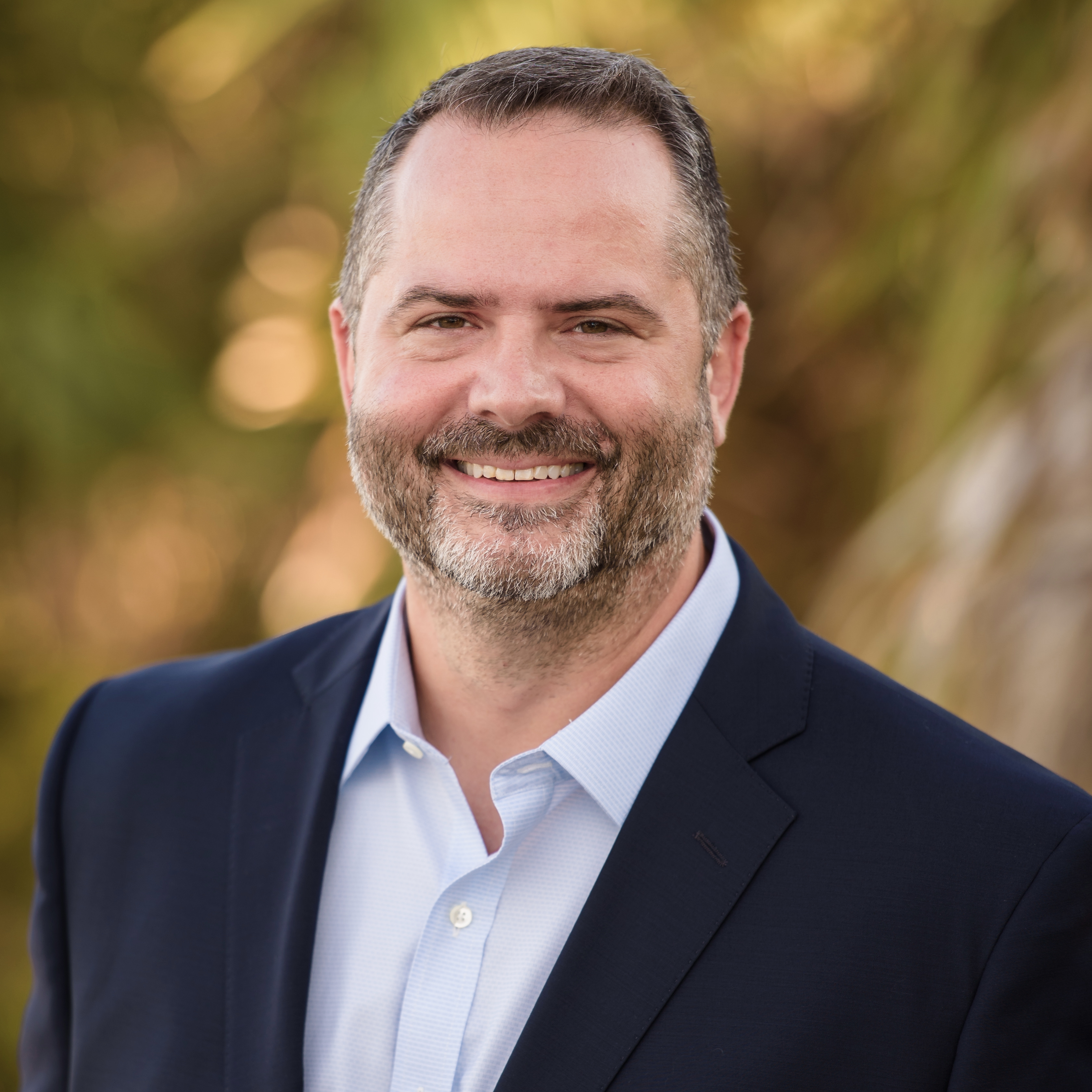
Chris Shoup, CFP®
Founder, Financial Advisor


We deliver financial planning and investment management strategies that are personalized to your needs, goals and lifestyle.
Talk with an AdvisorOffice: 1600 E 8th Ave., Ste. A200 Tampa, FL 33605
Additional Meeting Location: 200 Central Ave. St. Petersburg, FL 33701
© Southshore Financial Planning. All Rights Reserved. Privacy Policy. Form ADV. Designed by Converting Attention.
Southshore Financial Planning LLC (“Southshore Financial Planning”, “Southshore”) is a registered investment advisor offering advisory services in the State of Florida and in other jurisdictions where exempted. Registration does not imply a certain level of skill or training. The presence of this website on the Internet shall not be directly or indirectly interpreted as a solicitation of investment advisory services to persons of another jurisdiction unless otherwise permitted by statute. Follow-up or individualized responses to consumers in a particular state by Southshore Financial in the rendering of personalized investment advice for compensation shall not be made without our first complying with jurisdiction requirements or pursuant to an applicable state exemption.
All written content on this site is for information purposes only. Opinions expressed herein are solely those of Southshore Financial Planning, unless otherwise specifically cited. Material presented is believed to be from reliable sources, and no representations are made by our firm as to other parties’ informational accuracy or completeness. All information or ideas provided should be discussed in detail with an advisor, accountant or legal counsel prior to implementation.
